
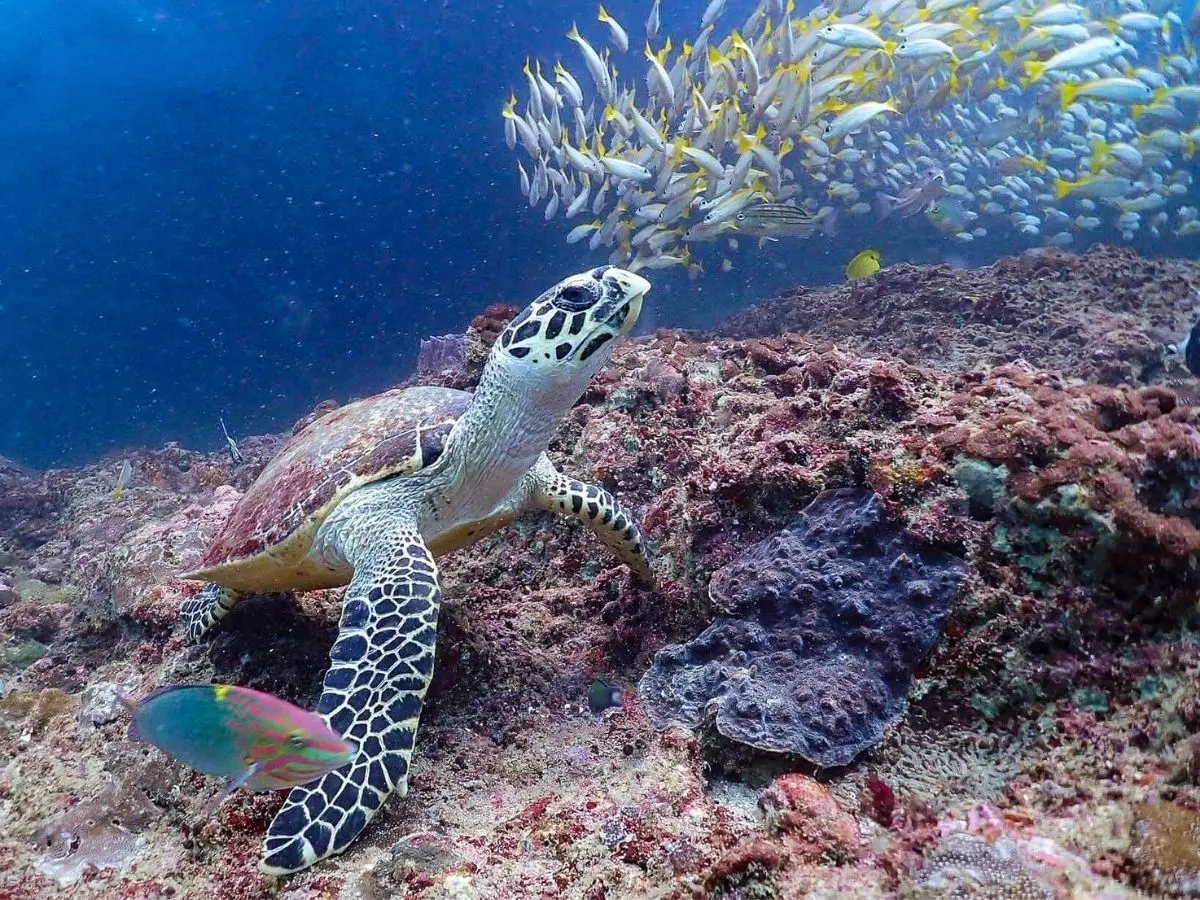
The Similan Islands are more than beaches and blue water. Mu Ko Similan National Park protects coral reefs, deep channels, granite shorelines, beach forest and nesting habitat.
Wild animals are not performers. A responsible trip offers the chance to observe nature without guaranteeing a sighting or disturbing it.
Sea turtles
Green and hawksbill turtles are associated with the park, and official park reports document green-turtle nesting and hatchlings on Koh Miang, Island 4.
You may see a turtle while snorkelling or diving, but never chase it for a photograph.
If you see one:
- Keep a respectful distance.
- Do not block its path to the surface.
- Do not touch its shell.
- Avoid surrounding it with a group.
- Let it choose whether to remain or swim away.
Nesting beaches may be closed or roped off. Do not enter them.
Reef fish
The wider Similan-Surin region has exceptional marine diversity. Common reef categories can include:
- Butterflyfish
- Angelfish
- Parrotfish
- Surgeonfish
- Triggerfish
- Anemonefish
- Fusiliers and other schooling fish
Species and numbers differ by site, depth, season and conditions. Avoid using a generic fish photograph to claim a particular animal was seen on today’s trip.
Sharks and rays
Reef sharks, leopard sharks and rays are possible in the wider park. They are usually the highlight of a lucky observation, not a danger to be sensationalised.
Follow the guide:
- Do not chase.
- Do not attempt to touch.
- Do not use bait.
- Do not block the animal.
- Keep movements calm.
Manta rays are particularly associated with scuba areas such as Koh Bon, but encounters are never guaranteed.
Whale sharks and dolphins
Whale sharks, whales and dolphins are recorded in the wider marine region. They travel over large distances and are not dependable day-trip attractions.
The correct wording is “possible” or “recorded in the region”, not “you will see”.
Do not select a trip solely because an advert uses a whale-shark photograph.
Nicobar pigeons
The Nicobar pigeon is a distinctive ground-feeding bird with dark iridescent plumage. It is among the birds associated with the Similan park.
Observe quietly. Do not feed it or follow it into vegetation.
Sea eagles, kites and other birds
The ASEAN Heritage Parks source records rich birdlife including:
- White-bellied sea eagles
- Brahminy kites
- Terns
- Hornbills
- Drongos
- Babblers
- Sunbirds
- Flowerpeckers
A day visitor may see only a few species. Bird activity changes with time, weather, habitat and crowds.
Flying foxes and bats
The national park’s island forests support bats, including flying foxes. They may be visible resting in trees or moving around at quieter times.
Do not:
- Throw objects to make them fly
- Stand directly below a roost for long periods
- Use loud sounds
- Approach a fallen or injured bat
Tell a ranger if an animal appears injured.
Crabs and small island wildlife
ASEAN park information highlights a hairy-legged mountain land crab found in the Similan environment. Other crabs, reptiles and small mammals also use the forest and beach habitat.
Keep food sealed and never encourage animals toward visitor areas.
Coral is wildlife habitat
Coral is living habitat, not a rock garden.
Protect it by:
- Keeping fins up
- Never standing on reef
- Not collecting broken pieces
- Securing cameras and straps
- Following the guide’s entry and exit route
In January 2026, Thailand’s Department of National Parks reported monitoring 14 coral stations across the park. That report is useful evidence of active management, but coral condition changes and should not be turned into a permanent promise that every reef is always healthy.
Wildlife photography
Use zoom rather than pursuit.
For ethical photographs:
- Keep the animal’s escape route open.
- Do not stage contact.
- Do not move animals or branches.
- Avoid flash close to sensitive wildlife.
- Never ask a guide to hold an animal.
- Caption the photograph accurately.
If the exact species or location is uncertain, do not guess.
The best wildlife expectation
Expect a protected marine environment, not a checklist.
You may see reef fish, birds, crabs or a turtle. You may also have a quiet day with fewer obvious animals. The value of the national park is that habitat remains protected whether or not it produces a dramatic photograph for one visitor.
Continue planning your Similan Islands trip
Find your island adventure
Which Similan Islands Trip Is Right For You?
A day of beach time and snorkelling, an early arrival at the islands, or more time exploring beneath the surface—which adventure will be yours?
Snorkelling · Classic
Classic Similan Islands Trip
The straightforward full-day choice with hotel transfer, island visits, guided snorkelling, meals and national-park fees included.
View the Classic trip →Snorkelling · Earlier start
Early Bird Similan Islands Trip
For travellers happy with a very early collection who want to reach the national park before the main daytime crowds.
View the Early Bird trip →Certified divers
Scuba Diving Day Trips
Enjoy two guided dives at the Similan Islands, Surin Islands or Richelieu Rock. Find the adventure that matches your certification and experience.
Compare scuba day trips →Multi-day diving
Similan Islands Liveaboards
Compare the current two-, three- and four-day experiences. Route, cabin, dates and diver suitability are confirmed before payment.
Compare liveaboards →

